
Zanzibar travel guide
Zanzibar tides explained: when you can swim, by beach
The tide decides more about a Zanzibar beach day than the weather does. Here is how it works, what it means on each coast, and how to plan your swims around it.
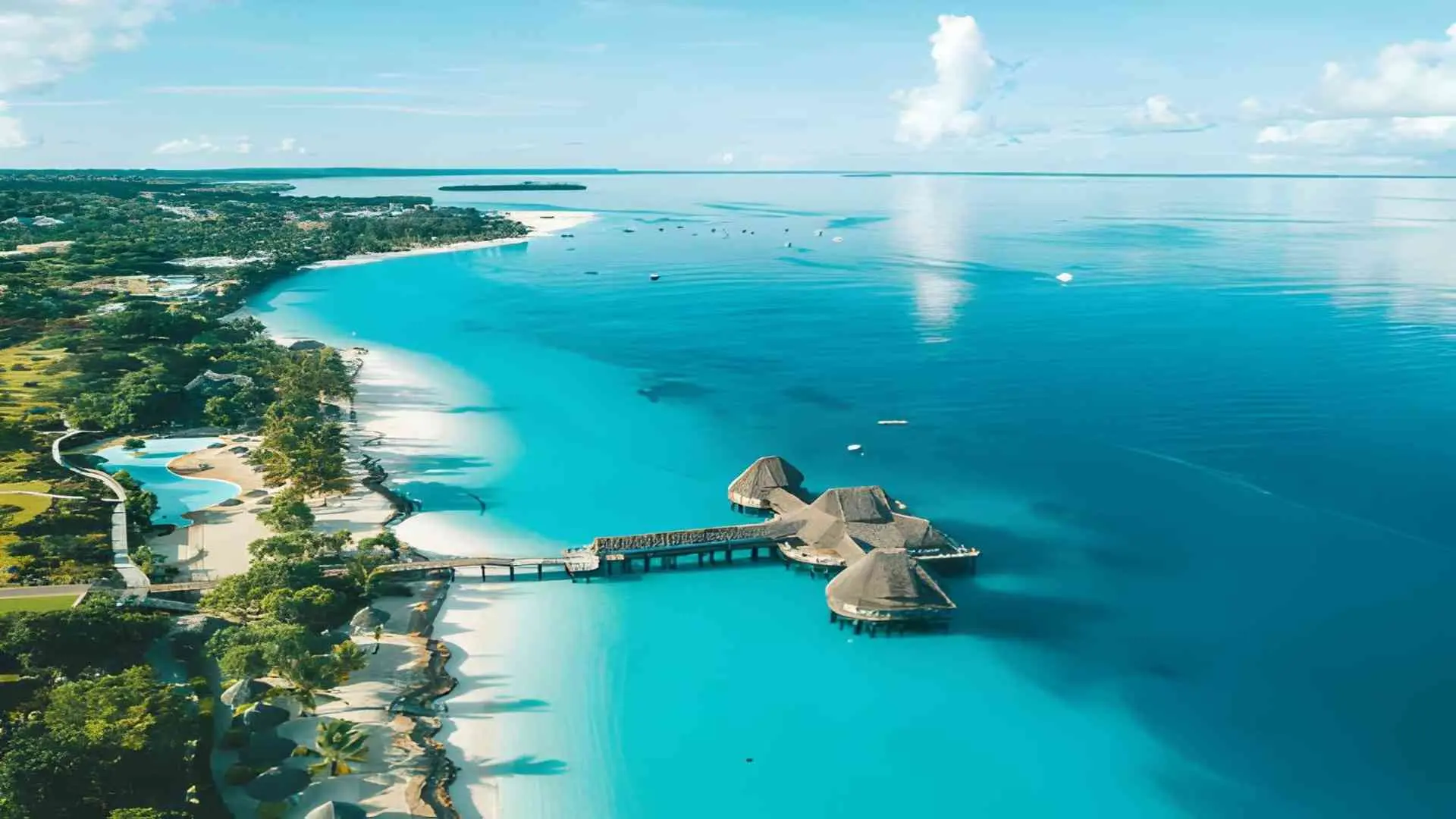
How Zanzibar's tides work
Zanzibar has two high tides and two low tides in roughly every 24 hours. It takes about six hours for the water to go from high to low, and about six hours to come back.
The timetable does not stay still. Each day, every high and low tide arrives later than the day before — in the forecast below, by between about 35 and 50 minutes a day. A beach that is perfect at 10am on Monday may be dry at 10am by Thursday.
The size of the tide also changes through the month. The biggest swings, called spring tides, come around the full and new moon. Halfway between, the tides are smaller and the sea does not go out as far.
How big the swing can be
On a big tide, the difference between high and low water at Zanzibar can be more than 4 metres. These were the forecast figures for the Zanzibar station on 28 October 2026:
| Tide | Time | Height |
|---|---|---|
| High | 04:49 | 4.33 m |
| Low | 11:14 | 0.03 m |
| High | 17:13 | 3.56 m |
| Low | 23:11 | 0.25 m |
That morning, the water dropped 4.30 metres in under six and a half hours (4.33 m − 0.03 m). On a gently shelving east-coast beach, a drop like that empties the lagoon out to the reef.
What the tide means on each coast
North: Nungwi and Kendwa
The north-west tip has deeper water close to the beach. Swimming is possible for most of the tide cycle, which is why the north suits travellers who want to swim whenever they like.
North-east: Matemwe and Pwani Mchangani
A wide reef lagoon. At low tide the water pulls back across the flats, and swimming is best around high tide. This is also the coast for boat trips out to Mnemba Atoll, which are usually timed by the operator around the tide.
East: Michamvi, Pingwe, Bwejuu, Paje and Jambiani
This is where the tide matters most. At low tide the sea can retreat hundreds of metres, leaving sand, seagrass and pools out towards the reef. Expect a swim window of roughly two to four hours around each high tide. The Michamvi–Pingwe peninsula tends to keep swimmable water closer to low tide than Paje or Jambiani, but no part of the east coast is tide-proof.
South: Kizimkazi
Kizimkazi is better known for dolphin trips than for swimming off the beach. Boat departures are usually timed around tide and sea conditions — ask your operator.
To choose an area to stay with the tide in mind, see Best beaches in Zanzibar.
How to plan a beach day with a tide table
- Get the table. Most beach hotels post the day's tide times at reception. Online forecasts give the Zanzibar station; times on the east coast can be a little different, so trust your hotel's local table.
- Find the high tides. On the east coast, plan to swim from about two hours before to two hours after high tide.
- Check the time of day. Using the example above, the morning high tide fell at 04:49 — before sunrise. The useful one was 17:13, giving an east-coast swim window of roughly 15:15 to 19:15.
- Look a few days ahead. Because the tides move later each day, a swim window that falls in the dark today may land in late morning later in the week.
- Plan low tide too. Low tide is the time for reef walks, seeing the seaweed farms, and the flat, shallow lagoon that makes Paje a kitesurfing spot.
Staying safe on the reef
- Wear reef shoes. Sea urchins sit in the crevices of the reef flats and are hard to see. Solid-soled reef shoes are the simplest protection, and the choice in resort shops is limited, so pack your own.
- Watch the incoming tide. If you walk out to the reef at low tide, start back before the water turns. It returns faster than people expect across flat ground.
- Be careful near reef gaps. On the biggest tides, currents through gaps in the reef can be strong. Swim inside the lagoon, not at the reef edge.
- Ask about jellyfish. Blooms are unpredictable. They are reported most often from about February to May. Hotel staff know the day's conditions.
- Don't stand on coral or take shells and starfish from the reef.
For wider safety advice, see Is Zanzibar safe?
Planning a safari around your beach days
If you are adding a fly-in Serengeti safari, check the tide table for your beach days before you fix your safari dates. You may prefer to be on the beach on the days the high tide falls in the afternoon, and in the Serengeti on the days it falls in the dark. Our safaris start and end at your Zanzibar hotel, so they slot into the gaps.
Zanzibar tides: quick answers
Can you swim in Zanzibar at low tide?
On the north coast around Nungwi and Kendwa, usually yes. On the east coast the sea can retreat hundreds of metres at low tide, so swimming there is mainly a few hours either side of high tide.
How many tides a day does Zanzibar have?
Two highs and two lows in roughly every 24 hours, about six hours apart. The times move later each day, by roughly 35 to 50 minutes.
How big is the tide?
On the largest tides, more than 4 metres. On 28 October 2026 the Zanzibar forecast showed a 4.33 m high tide followed by a 0.03 m low.
Do I need reef shoes?
On the east coast, yes. Sea urchins live in the reef flats and are hard to see in shallow water.
Where do I find tide times?
At your hotel's reception, or on an online forecast for the Zanzibar station. The hotel's local table is the more reliable one for the east coast.
Sources
- Tide-Forecast.com — Zanzibar tide times (figures for 28 October 2026)
- WildToSea — Swimming in Zanzibar: tides, jellyfish and the best beaches (facts checked June 2026)
Add the Serengeti to your beach holiday
Fly from Zanzibar in the morning and be on a game drive by lunchtime. Tell us your dates and we will send a firm, all-inclusive price.